Frequently Asked Questions
What is a BESS?
A Battery Energy Storage System (BESS) is like a giant rechargeable battery. It stores electricity when there’s more than we need and sends it back to the grid when demand is high. That helps keep power steady and costs under control.
The system is housed in large, steel containers that look a lot like shipping containers. Inside, they hold rows of batteries—similar to the ones in your phone or laptop, just a whole lot more of them. These units also include cooling systems and a battery management system that keeps everything operating safely.
How does a BESS work?
Think of a BESS like a water tank for electricity. It “fills up” when power is abundant—typically during the day—and “empties” when energy use is high, like in the evening. This helps balance supply and demand so there are fewer disruptions and lower overall costs.
The system doesn’t generate electricity—it simply stores and delivers it when needed. Everything is carefully monitored to ensure it runs safely and efficiently.
Why the Halstead Industrial Park?
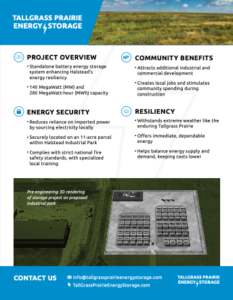
This project brings real benefits to Halstead:
- Construction will bring jobs and local spending—from lodging and dining to equipment rental and construction services.
- Long-term, it helps position Halstead as a forward-looking community, which can attract new companies that value reliable infrastructure.
- The project adds millions in new local revenue, helping support city services like roads, parks, and public safety—without raising taxes.
Most importantly, it reflects Halstead’s values: investing in the future while taking care of what matters now.
What does the Halstead community gain from hosting this project?
A Battery Energy Storage System (BESS) can be explained most simply as a collection of big, rechargeable batteries that store excess electricity from the grid when it is needed the least and then releasing the electricity later when it is needed the most.
A typical utility-sized BESS unit looks similar to other electrical equipment you would see in any electrical substation and is often compared visually to a shipping container. Inside of each “shipping container-type” unit is a series of cabinets that house racks of batteries which are very similar to the batteries found in your personal cellphone or laptop. In this case there is simply more of them. Additionally, there is usually a cabinet for a heating & cooling system and another cabinet for a Battery Management System that monitors & controls the system. Collectively, all of these parts make up a Battery Energy Storage System.
When will the project be approved?
Before construction begins, the project must receive a Special Use Permit (SUP) from the City of Halstead. This includes public input, reviews by the Planning Commission and City Council, and a full assessment of safety and environmental factors.
Right now, the City is finalizing a new ordinance for energy storage systems. Once that’s in place, we’ll submit our application and work closely with the community throughout the process.
What will be included in the Special Use Permit Application?
The application will outline all the details—project layout, safety systems, fire protection, sound levels, and electrical connections. It will also address stormwater planning, landscaping, and emergency response coordination.
We’ll ensure the project meets all city guidelines and reflects Halstead’s priorities. And we’ll keep the process open, with time for public review, questions, and feedback.
Where does the electricity come from and is this related to renewable energy?
The system stores energy from the power grid—which can include wind, solar, natural gas, and other sources. Storage helps even out the ups and downs, so the grid runs more smoothly.
That said, battery storage works especially well with renewable energy. It helps store solar power for use after sunset, making clean energy more practical and reliable around the clock.
Will the BESS be outdoors or indoors?
The system will be located outdoors, within a fenced, secure area at the Halstead Industrial Park. The battery units are housed in rugged, weatherproof enclosures built to handle local conditions and meet all national safety standards.
The area will include setbacks and visual screening to reduce any impact on nearby properties and preserve Halstead’s small-town look and feel.